


OUR PARTNERS
LA MILANESIANA
Conceived and directed by Elisabetta Sgarbi

La Milanesiana was founded in Milan in 2000 on the initiative and under the artistic direction of Elisabetta Sgarbi.
Since its very first edition, the festival has presented itself as a major “laboratory of excellence” dedicated to literature, cinema, music, art, science, and philosophy. Its mission is to create intersections between different forms of knowledge and artistic expression, bringing to Milan internationally renowned figures from the cultural and scientific worlds — including Nobel Prize winners in Literature and Science, Academy Award winners, and musicians honored with the world’s most prestigious distinctions.
Over the years, the festival has continuously expanded its scope. While originally focused on Literature, Music, and Cinema, La Milanesiana gradually embraced additional fields such as Science, Art, Philosophy, Theatre, Law, and Economics.
What began as a Milan-based event has now grown into a nationwide cultural project, taking place across fourteen Italian cities.
FONDAZIONE FRANCO BATTIATO

The Fondazione Franco Battiato ETS was established to protect, promote, and enhance the artistic, cultural, and spiritual legacy of Franco Battiato, preserving his multidisciplinary vision that brought together music, philosophy, art, and mysticism.
The Foundation is dedicated to preserving archives, unpublished materials, and historical memorabilia connected to the artist. It also promotes events, exhibitions, film programs, publishing projects, and cultural initiatives inspired by Battiato’s interdisciplinary approach, with particular attention devoted to younger generations.
Among its most significant projects is the immersive exhibition “Franco Battiato. Un’altra vita”, presented at the MAXXI – Museo nazionale delle arti del XXI secolo.
MUSIKÈ

Musikè is a festival of music, theatre, and dance promoted and organized by the Fondazione Cassa di Risparmio di Padova e Rovigo, dedicated to dialogue between the arts.
Now in its fifteenth edition, the festival presents a program of twelve events featuring nationally and internationally renowned artists alongside emerging artistic voices.
Performances take place in some of the most representative cultural venues in Padua and Rovigo, including the Sala dei Giganti at Palazzo Liviano and the Teatro Verdi di Padova.
The festival is distinguished by its interdisciplinary approach, encouraging encounters between different artistic languages and offering audiences an immersive cultural experience.
Originally conceived as a series of special events, Musikè has gradually evolved into a true cultural season spanning autumn, winter, and spring.
Its mission is to make culture widely accessible while enriching the artistic life of the region through the presence of major figures from both the Italian and international cultural scene.
SAISON CULTURELLE VALLE D'AOSTA

The Saison Culturelle is one of the leading cultural institutions in the Aosta Valley, offering the local community a rich and diverse programme of performances and entertainment. Over the years, it has developed a multidisciplinary artistic vision capable of engaging an ever-growing audience, combining opportunities for cultural enrichment and reflection with moments of enjoyment and shared experience.
The season embraces a wide range of artistic expressions, from theatre and music to dance and musical theatre, fostering dialogue between different languages, traditions and creative sensibilities. Through its carefully curated programme, the Saison Culturelle continues to promote artistic excellence while remaining accessible to a broad and diverse public.
ANIMA MUNDI

Anima Mundi is an international sacred music festival promoted by the Opera della Primaziale Pisana. Founded in 2001 from an idea by Maestro Giuseppe Sinopoli, the festival has become one of the most prestigious events of its kind in Italy.
Anima Mundi brings together leading international orchestras, conductors, and performers within the extraordinary setting of the Cattedrale di Pisa and the Camposanto Monumentale di Pisa, creating a unique dialogue between music, spirituality, and artistic heritage.
Organized by the Opera della Primaziale Pisana — the historic institution dedicated to the preservation and enhancement of Piazza del Duomo — the festival offers audiences an immersive cultural and spiritual experience in one of Italy’s most iconic monumental sites.
Usually held between September and October, Anima Mundi has established itself as a major cultural event of international significance.
PALAUNICAL

The venue now known as PalaUnical was inaugurated in 2005 as a state-of-the-art multifunctional center designed to host concerts, live performances, corporate events, conferences, trade fairs, and sporting events.
Since 2018, the relaunch and management of the structure have been overseen by Imemi srl, a group formed by six leading companies in the entertainment and communication sector: Zed, Eventi Verona, IMARTS, Italstage, Medianet, Multiradio. In July 2023, a new sponsor, Unical Spa, joined the project in support of the venue, leading to the official renaming of the structure as PalaUnical.
Designed with a modern, flexible, and modular concept, PalaUnical carries forward the legacy of the former PalaBam, reaffirming its vocation as a space capable of hosting a wide variety of events.
The complex is divided into three main adjacent areas: the Arena, the Theatre and the Office Building.
STAGIONE TEATRALE DEL COMUNALE DI GONZAGA

The Teatro Comunale di Gonzaga is one of the city’s most important cultural gathering places. Originally founded in 1905 as the Casa del Popolo (“People’s House”), the theatre gradually established itself as a venue dedicated to the promotion and presentation of live performance.
Today, it hosts a diverse program including theatre productions, comedy, concerts, and performances by nationally renowned artists.IMARTS collaborates with the Municipality of Gonzaga in shaping the titles and programming of the main theatre season.
PREMIO PIGRO - IVAN GRAZIANI
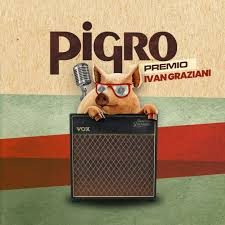
The “Pigro – A Tribute to Ivan Graziani” Award is organized by the Pigro Cultural Association, chaired by Anna Maria Bischi Graziani. Over the years, it has been financially supported by the Municipality of Teramo and Banca dell’Adriatico. To date, the event has reached nineteen editions, almost all held in Teramo, Ivan Graziani’s hometown, with the exception of the 2006 edition, which was hosted by the City of Urbino as part of the celebrations for the 500th anniversary of its university.
Pigro was created both as a showcase for artists paying tribute to Ivan Graziani by performing and reinterpreting his songs, and as a competition for emerging talents, primarily singer-songwriters. All participating artists perform strictly live and present an original song—something that remains rare among music competitions.
The event takes its name from Pigro, the iconic song and album released by the singer-songwriter in 1978.